Menstruation can be a natural invitation to slow down, listen to the body and make a little more space for rest.
Every cycle is different. Some days we may feel energetic and others we may need more quiet and support.
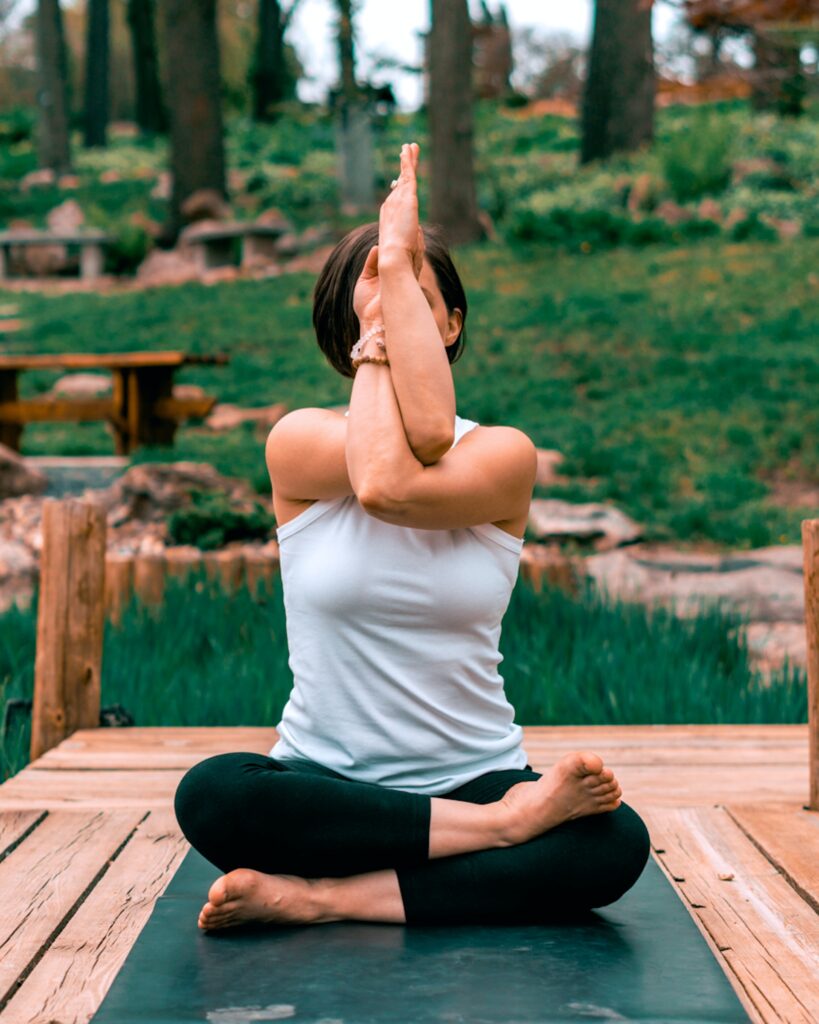
This gentle Yin Yoga sequence is designed as a slow, restful practice for the days around your period. The postures use time, gravity and support to invite softness through the hips, lower back and pelvis.
Rather than trying to push the body or achieve a particular result, let the practice be an opportunity to pause and listen.
WHY PRACTISE YIN YOGA DURING YOUR PERIOD?
Yin Yoga is a slow practice in which postures are generally held for several minutes with the support of props when needed.
During menstruation, you may prefer a quieter practice with less intensity and more rest.
The practice can help you:
- Slow down and settle
- Release everyday muscular tension
- Bring awareness to the pelvis, hips and lower back
- Create space for rest and reflection
- Spend a little time listening to your body
In Yin, there is no need to force a posture. Your body’s sensations are more important than how the shape looks.
If something feels painful, sharp or uncomfortable, come out of the posture.
YIN YOGA SEQUENCE FOR YOUR PERIOD
Move slowly and stay warm. Use cushions, bolsters or blankets whenever they help you feel supported.
1. Caterpillar
Focus: lower back, hamstrings and quiet reflection
Sit with your legs extended. Fold forward naturally and allow your spine to round. Let your head and shoulders soften.
Hold for 3–5 minutes.
Stay relaxed and breathe naturally.
2. Supported Squat
Focus: hips, groins and legs
Stand with your feet comfortably apart and lower into a squat. Use a cushion or block underneath you if helpful.
Hold for 1–3 minutes.
Come out slowly and take a moment to notice how you feel.
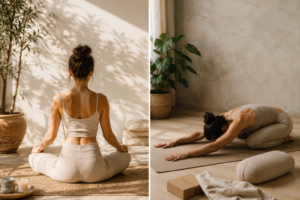
3. Child’s Pose
Focus: rest and gentle grounding
Sit back towards your heels and fold forward. Rest your forehead on your hands, a cushion or a block.
Hold for 3–5 minutes.
Allow the breath to become natural and unforced.
4. Butterfly
Focus: hips and inner thighs
Bring the soles of your feet together and allow your knees to fall towards the sides.
You can stay upright or fold forward gently.
Hold for 3–5 minutes.
There is no need to push the knees towards the floor.
5. Reclining Twist
Focus: gentle movement through the spine
Lie on your back and allow both knees to fall towards one side. Support them with a cushion if needed.
Keep the movement comfortable and relaxed.
Hold for 3–5 minutes on each side.
6. Savasana
Focus: complete rest
Lie comfortably on your back, or choose another position that feels better for you.
Allow the feet to relax and the hands to rest softly.
Stay for 5–10 minutes.
There is nothing to achieve here.
Simply rest.
A FEW AYURVEDIC IDEAS FOR YOUR CYCLE
Ayurveda traditionally encourages us to pay attention to food, routine, rest and the qualities of our environment during menstruation.
Rather than following a fixed list of remedies, you can use this time to notice what your body is asking for.
You might choose:
- Warm, freshly prepared meals
- Nourishing foods that feel comfortable to digest
- Warm drinks
- Gentle movement
- More rest and quiet
- Time away from unnecessary stimulation
Warmth can also feel comforting. A hot water bottle placed on the lower abdomen or back may be a simple way to create warmth and relaxation.
Dates & Almonds
Dates and almonds are traditionally valued in Ayurveda as nourishing foods.
You can enjoy them simply as part of your diet, or prepare a warm date and almond drink:
Ingredients
- 3–5 soaked dates
- 5–7 soaked almonds, skins removed
- Warm water or unsweetened almond milk
Blend until smooth and enjoy warm.
There is no need to use a particular quantity as a treatment. Choose an amount that suits your appetite and digestion.
LISTEN TO YOUR BODY
There is no perfect way to experience your menstrual cycle.
Some months may invite movement. Others may ask for more rest.
Instead of asking, “What should I be doing?”, try asking:
What do I need today?
More movement?
More nourishment?
More quiet?
More rest?
This is where yoga and Ayurveda meet: not in following another set of rules, but in becoming more attentive to your own experience.
Slow down. Listen deeply.
A note on menstrual pain
Some menstrual discomfort is common, but severe, persistent, worsening or unusual pain should not simply be managed with yoga or home remedies.
If you experience significant pain, unusually heavy bleeding, fainting, persistent changes in your cycle or other concerning symptoms, speak with a qualified healthcare professional.
Yoga and Ayurvedic practices are complementary wellbeing practices and do not replace medical diagnosis or treatment.
About the Author
Elena Beurdeley is an Ayurveda Practitioner & Educator, yoga instructor and mindfulness teacher at The Ayurveda Centre.
Her work brings together Ayurveda, nutrition, lifestyle, yoga and mindfulness to help people slow down, listen to their bodies and develop a more intimate relationship with body and mind.
This article is for general educational purposes and is not intended to diagnose, treat or prevent any medical condition.