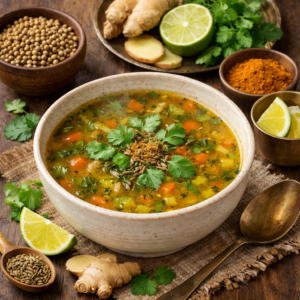
Discover a nourishing Ayurvedic butternut squash soup recipe to balance Vata and Pitta doshas. Sweet, grounding, vegan-friendly, and perfect for autumn.
This nourishing Ayurvedic butternut squash soup is the perfect meal for autumn and early winter.
Sweet, grounding, and cooling in nature, it is both hearty and easy to digest, offering comfort and deep nourishment as the weather turns colder.
In Ayurveda, butternut squash is considered sattvic and alkalinising, helping to drain excess fluid, support light detoxification, and build Ojas — the subtle essence responsible for vitality, immunity, and emotional stability.
This soup is an ideal dish to balance Vata and Pitta doshas, while it may slightly increase Kapha if consumed in excess or with heavy sides. Enjoy it warm for a light yet satisfying meal that grounds the body and soothes the mind.
Ingredients
-
1 medium butternut squash, peeled, sliced, and diced
-
½ sweet potato
-
2 tbsp olive oil (or ghee for a richer option)
-
1 onion, chopped
-
1 tsp garlic, chopped
-
1 tsp fresh ginger, grated
-
¼ tsp cinnamon
-
½ tsp cumin seeds
-
½ vegetable stock cube
-
Coconut milk (to taste)
-
Juice of ½ fresh lime
-
Salt and freshly ground black pepper
-
Fresh parsley or coriander leaves, for garnish
-
Prepare the base.
Heat olive oil (or ghee) in a pot over medium heat. -
Sauté the aromatics.
Add the chopped onion and sauté for about 2 minutes until translucent.
Then add garlic and ginger, cooking for another 1–2 minutes. Stir in the cumin seeds and let them release their aroma. -
Add the vegetables and spices.
Add the diced butternut squash, sweet potato, and cinnamon. Crumble in the vegetable stock cube and mix everything well. -
Cook until tender.
Pour in enough boiling water to just cover the vegetables.
Simmer on low to medium heat for around 15 minutes, or until the squash is soft. -
Blend until smooth.
Allow the soup to cool slightly, then blend until thick and creamy. -
Add the final touches.
Stir in coconut milk to taste, followed by fresh lime juice. Season with salt and pepper. -
Serve and enjoy.
Garnish with parsley or coriander leaves, and serve warm.
Ayurvedic Tip
For an extra boost of protein and texture, top your soup with:
-
Roasted almonds or pumpkin seeds
-
Lightly sautéed paneer, tofu, or shredded chicken (for non-vegan option)
This soup is best enjoyed warm, as part of a light dinner or nourishing lunch. Its smooth, sweet flavour and creamy texture are deeply grounding and soothing to the nervous system — especially beneficial during Vata season (autumn to early winter).
Ayurvedic Insight
-
Vata: This recipe is highly balancing — the sweet taste and oily texture are grounding and nourishing. You may use ghee instead of olive oil for added warmth and stability.
-
Pitta: The mild sweetness and cooling coconut milk make it soothing for Pitta. You can reduce the ginger slightly if feeling overheated.
-
Kapha: To lighten the recipe, use less coconut milk, skip the sweet potato, and add a touch of black pepper, mustard seeds, or ginger for warmth and stimulation.
Enjoy mindfully
Take a moment before eating to give thanks to Mother Nature, your digestive fire (Agni), and the hands that prepared your meal. Eating with awareness and gratitude transforms nourishment into true vitality. ????
Bon appétit!
???? Try our Nourishing Ayurvedic Winter Soup or this delicious Quick Ayurveda Autumn Soup Recipe
About the Author
Elena Beurdeley is a certified Ayurveda Nutrition, Plant Medicine & Lifestyle Practitioner (Ayurveda Institute, London). She offers Ayurvedic Massage Therapies and is a Trauma-Informed Yoga Instructor. Read Elena’s full bio here.
Disclaimer
This article is intended for educational purposes only and does not replace medical or professional advice. Always consult a qualified healthcare or Ayurvedic practitioner before making changes to your diet or lifestyle, particularly if you have an existing condition.